Your business requires routine sanitation scheduled according to potential hazards, food processing capacity, allergen concerns, and regulatory checks, plus verification documentation demonstrating HACCP compliance, regulatory audits, and public health standards. The following sections describe essential sanitation program components.
Main Points
- Brampton's food safety cleaning professionals clean for restaurants, grocery departments, commissaries, warehouses, bakeries, schools, mobile vendors, and allergen-sensitive operations.
- Cross-contamination reduction is achieved by sanitizing frequently contacted areas, food-contact equipment, kitchens, floors, drains, restrooms, and storage areas with sectional methods.
- Recording of completion through checks, reviews, and action records verifies approved vendors have confirmed approved sanitizer dilution, alignment, and exposure duration.
- Proper sanitation timelines account for danger, output capacity, switches, spills, and guidelines when assigning everyday, periodic, and annual duties by section.
- Highlight vendors demonstrating HACCP, public-health knowledge, WHMIS preparation, liability, endorsements, coded implements, and assessment-ready sanitation files.
Food Safety Cleaning Requirements for Brampton Facilities
Food safety cleaning is required for any Brampton facility that processes, stores, prepares, packages, or serves food. Apply it to your business if it is subject to health inspections, food codes, or HACCP requirements. This includes restaurants, cafeterias, commissaries, grocery food departments, butcher shops, seafood counters, convenience stores, and institutional kitchens.
Adherent sanitation standards is required in distribution centers, manufacturing facilities, cold storage areas, bakery retailers, educational meal programs, banquet venues, and meal delivery services. Seasonal and mobile businesses are included, such as food trucks, event sellers, and temporary stalls. Your establishment needs recorded sanitation procedures whenever your workers prepare supplies, portion finished foods, reheat dishes, or organize allergen inventory. In Brampton, hygiene remains not voluntary; it comprises legal, operational, and consumer protection compliance.
What Do Brampton Cleaning Experts Clean?
You require experienced cleaning professionals who disinfect high-touch surfaces, cooking areas, flooring, and restroom facilities to maintain food safety and public health requirements. These locations are prioritized due to their high cross-contamination potential, falling hazards, and regulatory breaches.
If you comprehend their cleaning services, you'll successfully ensure your operation satisfies required operational and regulatory standards.
Disinfecting High-Touch Points
base sanitization frequency determined by traffic, contamination risk, and operational use.
verify that sanitization has effective
Cooking Zones, Walking Surfaces, and Restroom Environments
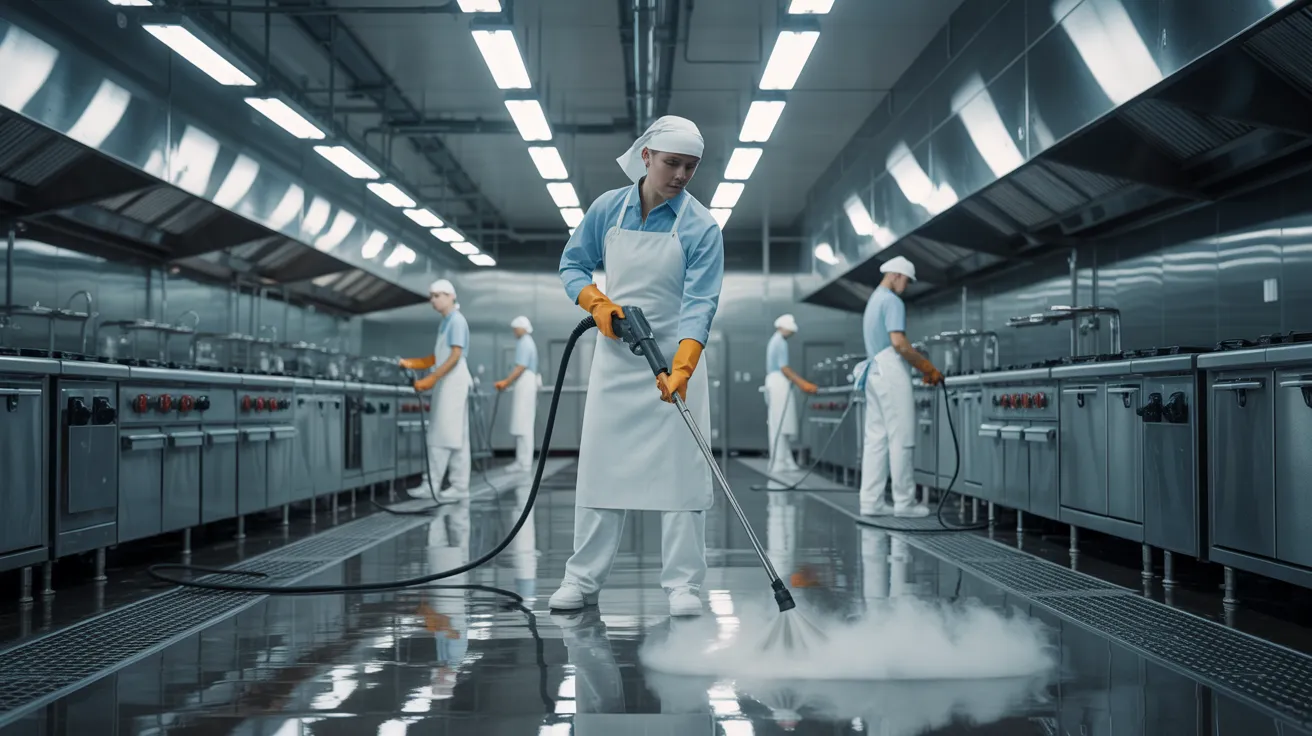
Expect Brampton cleaning experts to target kitchens, floors, and restrooms because each area carries unique foodborne illness prevention, slip-and-fall, and public health risks. In industrial kitchens, you need grease removal from cooking stations, appliance surfaces, drain systems, preparation areas, and backsplashes to minimize bacterial growth and pest activity.
Documented floor care is also provided as part of the service.
Restroom cleaning requires decontaminating touch areas, bathroom equipment, stall barriers, supply stations, and bins, restocking supplies and controlling odours. They also service restaurant moprooms, where chemical storage, sink hygiene, and drainage conditions can affect sanitation compliance and staff safety daily.
How Food Safety Cleaning Benefits Brampton Operations
Brampton operations require proper hygiene standards to fulfill compliance obligations and pass audits. You also reduce cross-contamination by cleaning and sanitizing food-contact surfaces, equipment, and high-touch areas correctly. Most importantly, you safeguard public health by lowering the risk of foodborne illness in your facility.
Sanitary Standards Adherence
Brampton food establishments must comply with mandatory safety protocols, so food safety cleaning is essential to fulfilling health codes, protecting customers, and preventing penalties. You must maintain hygienic food handling zones, written maintenance records, correct sanitizer application, and auditable operational standards that meet municipal and provincial inspection expectations.
Robust cleaning records help you to establish due diligence during inspection audits and show your procedures remain reliable, reproducible, and tracked. Comprehensive sanitation moreover supports allergen management by decreasing contaminants on joint machinery and frequently touched surfaces.
Cross-Contamination Control
Maintaining regulatory compliance copyrights on your power to stop cross-contamination during daily food handling and cleaning. You must separate raw ingredients from ready-to-eat foods, sterilize work zones between assignments, and position cleaning agents away from food surfaces. Clear procedures reduce transfer risks and support consistent compliance during inspections.
You should establish allergen separation to prevent major allergens from touching shared surfaces, containers, or equipment. Employ separate boards, labeled implements, and strict utensil labeling so staff don't mix items throughout cooking or serving. Mandate washing hands following uncooked proteins, shellfish, egg items, or allergen products. Change cleaning rags frequently, and verify sanitizer strength with test strips. When you train staff to follow these controls each work period, you build a more hygienic, secure workplace that satisfies Brampton's safety standards consistently.
Public Health Assurance
When sanitation protocols fails, you don't just face inspection failure—you increase the chance of food-related sickness affecting customers, staff, and the wider Brampton community. You also weaken your role in protecting public health, especially in busy food facilities where pathogens travel quickly through surfaces, equipment, and touchpoints.
You need cleaning protocols that eliminate contaminants, disinfect properly, and confirm effectiveness. That means following contact times, using approved disinfectants, recording cleaning times, and training staff to meet regulatory standards. These controls support pathogen reduction by lowering microbial loads before they contaminate surfaces or food. In Brampton, rigorous cleaning shields at-risk groups, prevents disease spread, and enables you to show proper care. When you maintain proper standards, you don't just meet regulations—you actively reduce risk and support safer food service throughout the region.
How Can Cleaning Practices Ensure Food Safety Compliance?
Maintaining strict sanitation practices supports food safety compliance by decreasing contamination threats, limiting pathogen development, and keeping your facility in accordance with sanitation requirements under HACCP-based programs and public health regulations. You confirm that product-contact areas stay visibly clean and microbiologically controlled, backing documented preventive controls and inspection readiness.
Conscientious cleaning also reinforces allergen mitigation by eliminating residues that can provoke undeclared allergen exposure. When you pair established sanitation practices with standards training, your staff can follow consistent approaches, employ approved chemicals accurately, complete records properly, and handle irregularities before escalation occurs. Systematic cleaning promotes traceability, confirms remedial measures, and demonstrates accountability during audits. It also helps you protect quality assurance, sustain regulatory compliance, and lower the in-depth article possibility of regulatory actions, product recalls, complaints, and unnecessary safety threats.
Establishing When to Arrange Commercial Cleaning
spill incidents, and following-maintenance work
Separate your periodic cleaning from standard cleaning
How Do You Choose Brampton Cleaning Experts?
Screen providers initially by their food-safe sanitation requirements—not budget alone. You need to confirm that every company meets CFIA, public health, and HACCP-aligned expectations for your operation. Demand insurance verification, WHMIS compliance, training records, and management systems. Evaluate technician understanding of contamination dangers, chemical safety, and documented sanitation practices.
You should further examine operational reliability and answerability. Request testimonials from Brampton food businesses, then review reply speed, corrective action plans, and communication standards. Validate the company supports supplier audits and can present inspection-ready documentation to authorities or external parties. Confirm equipment is maintained, colour-coded tools are used appropriately, and facility-specific risks are recognized. A qualified provider protects compliance, product integrity, and your reputation in the market.
Which components are contained in a hygiene cleaning program?
Create a documented strategy that makes clear every sanitation responsibility, standard, and task before production begins. You should detail cleaning schedules, authorized chemicals, concentration levels, contact duration, implements, and validation techniques for each location, surface, and apparatus. Incorporate pre-operational inspections, corrective actions, and employee training requirements.
Your strategy should also address contamination prevention controls, waste handling procedures, pest management measures, and written schedules for restrooms, drains, floors, and food-contact areas. Describe how you'll separate raw and ready-to-eat processes, facilitate ingredient tracking, and ensure accurate allergen labeling through validated cleaning between product changes. You should set accountability, keep signed records, and assess results against regulatory standards, HACCP controls, and customer requirements. When gaps appear, modify procedures immediately and retrain staff.
Frequently Posed Questions about the Plan
Can sanitation providers accommodate nighttime operations in Brampton facilities?
If you operate controlled facilities, you'll also need documentation that enable audits and ensure quality assurance.
Are hazard containment solutions provided from sanitation professionals?
Yes, you can find many Brampton cleaning experts who offer emergency spill response services. They handle contamination, assess risks, isolate affected areas, and start rapid decontamination to reduce exposure and avoid operational disruption. You should verify arrival timeframes, professional credentials, safety procedures, and disposal procedures. If your facility must comply with industry standards, select a service that records events, maintains regulatory procedures, and enables compliance verification.
Will eco-friendly disinfectants clean safely food-handling equipment?
Definitely, green disinfectants work safely on food-contact surfaces if you buy solutions certified for food use that adhere to regulatory requirements. You need to verify application timing, dilution rates, and rinse protocols prior to application. Plant-derived products lower harsh chemical exposure, but you must have demonstration of efficacy against target microorganisms. To ensure residue free surfaces, adhere to manufacturer instructions exactly and validate your cleaning agent satisfies relevant food safety standards.
Can maintenance plans be customized for seasonal shifts?
Certainly, sanitation programs respond to seasonal production changes effectively. Adapt frequencies, personnel, disinfectants, and testing procedures to align with seasonal patterns while maintaining regulatory compliance. Minimize operational delays through scheduling sanitization during production shifts, peak seasons, and equipment use patterns. Also revise SSOPs, training, and environmental testing to reflect transient threats, emerging allergens, or higher contamination levels. Regular reviews maintain the schedule effective.
Will commercial cleaners train employees on hygiene best practices?
Indeed, commercial cleaning providers typically provide employee coaching on sanitation best practices. Your team obtains instruction on proper chemical use, contact times, cross-contamination prevention, equipment disassembly, and record-keeping. They typically follow instruction with HACCP, GMP, and CFIA or local public health requirements. Many perform compliance inspections to confirm standards, identify gaps, and reinforce corrective actions. This supports you in maintain consistent procedures, achieve compliance, and decrease foodborne illness risks each day.
Summary
When you partner with Brampton food safety and commercial cleaning specialists, you don't just tidy up—you keep your operation inspection-ready and your protocols above board. From kitchens to processing floors, every polished surface and well-kept corner minimizes unwelcome guests and avoid expensive problems. By arranging cleanings at the right intervals and adhering to a detailed cleaning schedule, you protect staff, customers, and your brand image. In a strict regulatory setting, clean spaces are essential—they're fundamental to proper operations.